How Northern Soul, vinyl culture and the scooter scene can teach brands about authenticity, community and cultural relevance.
Beyond the Target Group
Marketing has become increasingly sophisticated at identifying audiences. Brands can analyse demographics, track digital behaviour, measure engagement and optimise campaigns down to the smallest detail.
But understanding an audience is not the same as understanding its culture.
Subcultures are built on something that traditional target group models often struggle to capture: shared values, collective memories, rituals, aesthetics, knowledge and a genuine sense of belonging. They are not simply collections of consumers with similar interests. They are communities that create their own meanings, develop their own codes and often maintain their identities for decades.
For brands, this presents both an opportunity and a challenge. How do you become relevant to a community without treating its culture as just another marketing opportunity?
To explore this question, it is worth looking at the enduring relationship between fashion, music, scooters and the people who keep these cultures alive.
More Than a Shirt: The Cultural Meaning of Brands
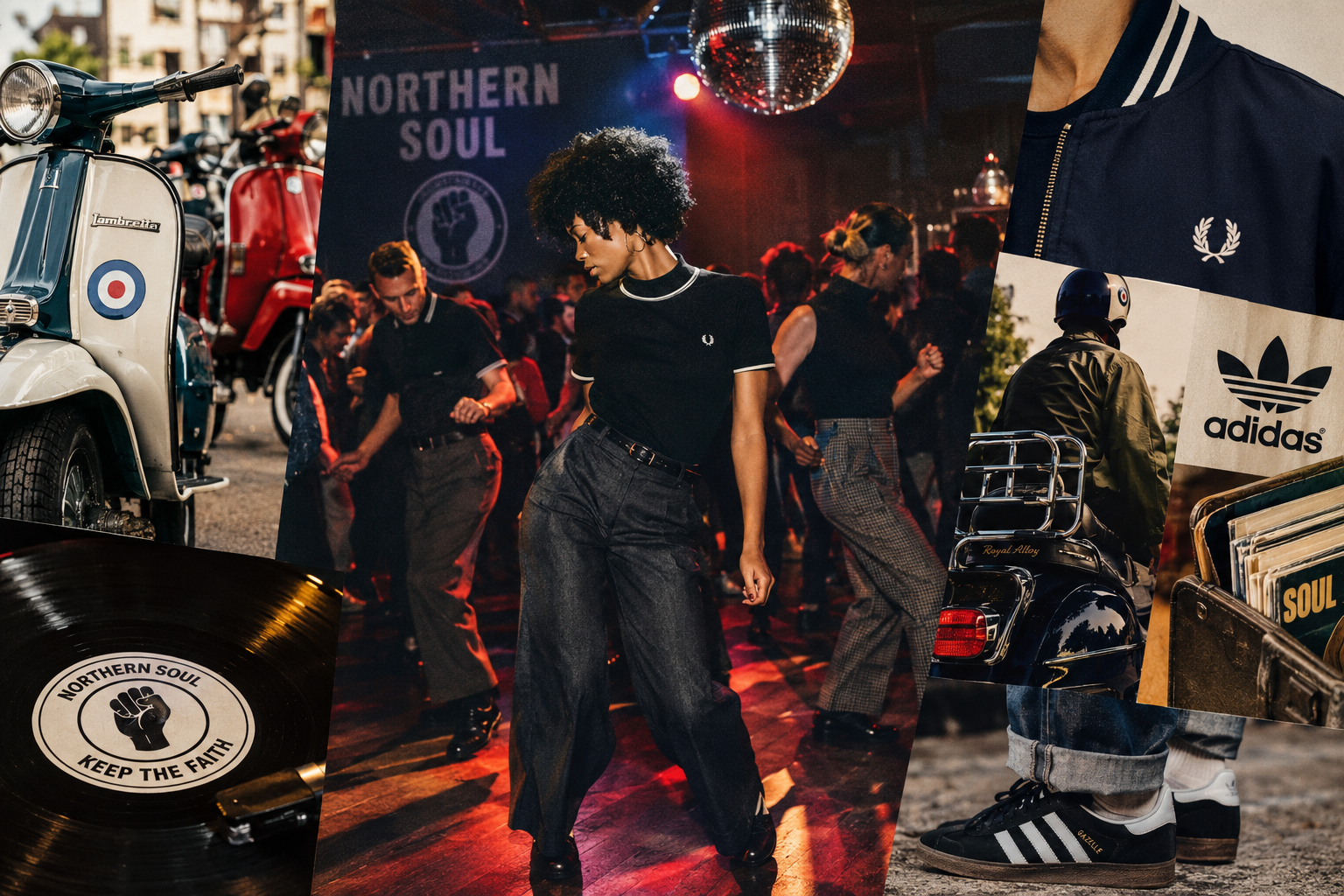
Consider Fred Perry. Originally rooted in tennis, the brand became associated with successive British youth cultures, including Mods and other music-led scenes. Its laurel wreath evolved into something that went far beyond its original sporting context.
Similarly, adidas Originals developed a cultural significance that extends well beyond sport. The relationship between adidas and hip-hop illustrates how communities can give products new meanings. When Run-D.M.C. embraced the adidas Superstar and released My Adidas, the trainers had become part of a cultural statement rather than simply sports equipment.
Neither example can be explained by product features alone.
The products became symbols through the people who wore them, the music they listened to, the places they gathered and the identities they expressed.
This is an important distinction for marketers: a brand can provide the object, but the community helps create its cultural meaning.
The same principle applies to subcultures across fashion, art, design, music and lifestyle. Their influence often emerges organically, long before it becomes visible in mainstream marketing.
Two Wheels, One Identity: Lambretta, Vespa and Royal Alloy
Few lifestyle objects demonstrate the relationship between products and cultural identity as clearly as the scooter.
For generations of Mods and scooter enthusiasts, Lambretta and Vespa have represented far more than individual models of transport. Scooters became part of a wider cultural expression that includes fashion, music, rallies, customisation and a shared appreciation of design.
The scooter is simultaneously a functional product, a personal statement and a reason to gather with like-minded people.
The details matter. The mirrors, paintwork, accessories, clothing, preferred models and knowledge of the scene all contribute to a recognisable identity. Owning a scooter can be the starting point, but participation in the culture gives it a deeper meaning.
Brands such as Royal Alloy, with its modern scooters inspired by classic British and European styling, operate in a market where heritage, aesthetics and contemporary lifestyle can intersect.
For marketers, the opportunity is not simply to sell a product to scooter owners. It is to understand the culture surrounding that product and identify meaningful ways to contribute to it.
That could mean supporting community events, collaborating with independent creators, enabling cultural gatherings or helping preserve the knowledge and traditions that make the scene distinctive.
The essential question is not just whether the product fits the audience. It is whether the brand understands what the product means to that audience.
The Sound of Authenticity: Northern Soul and Vinyl Culture
Northern Soul offers another compelling example of a subculture whose appeal cannot be reduced to a demographic profile.
Emerging in the UK around a passionate following for obscure American soul records, the scene developed its own musical canon, dance styles, venues and traditions. Rare records, original vinyl, dedicated DJs and all-night dance events became central to its identity.
For many participants, the attraction lies precisely in the things that resist easy mass production: discovering an obscure record, recognising a particular sound, sharing knowledge and experiencing music together on a dancefloor.
Vinyl is not merely a format. It represents physical ownership, collecting, musical discovery and a connection to the history of the music.
The DJ is not simply delivering entertainment. Knowledge, selection and the ability to read a room are part of the experience. The dancefloor is not just an event space. It is where individual enthusiasm becomes collective energy.
These elements create cultural value that cannot be replicated simply by putting a playlist online or adding a vintage visual identity to an advertising campaign.
For brands, Northern Soul demonstrates why understanding the details of a community matters. A superficial reference to retro style may capture the look, but it will not necessarily capture the spirit.
Authenticity comes from understanding the music, respecting the people who sustain the scene and recognising the difference between cultural participation and cultural imitation.
From Brand Exposure to Cultural Participation
Traditional sponsorship often begins with a straightforward proposition: a brand invests money in exchange for visibility, access to an audience and a set of marketing rights.
These objectives can be valuable, but subcultures offer the possibility of a deeper relationship.
Instead of asking how many people will see a logo, brands can ask how they might improve an experience, support a community or contribute something that participants genuinely value.
In the context of a soul weekender or scooter gathering, this could mean supporting live music, enabling a record fair, helping bring international DJs together, creating a meeting point for enthusiasts or making a cultural experience possible that would otherwise be difficult to deliver.
Such activities create opportunities for direct interaction between a brand and its audience. They allow people to experience a brand in a meaningful context rather than merely encounter its advertising.
This is where cultural sponsorship connects with experiential and live marketing.
The event becomes more than a channel for communication. It becomes a shared experience in which the brand can demonstrate its values through action.
A successful partnership does not have to dominate the event. In some cases, the most effective contribution is the one that makes the experience better while allowing the community and its culture to remain at the centre.
Brand Fit Comes Before Reach
Not every brand belongs in every subculture. And not every collaboration needs to be large to be effective.
The starting point should be cultural fit: a credible relationship between the brand, the community and the experience being created.
For marketers, this means looking beyond audience size and asking a few fundamental questions.
Does the brand have a credible connection to the culture? A historical relationship can help, but genuine interest, relevant products and meaningful contributions can also establish a connection.
Does the partnership create value for the community? The benefits should be tangible, whether through funding, facilities, access, expertise or support for independent cultural activity.
Does the brand respect the community’s identity? Subcultures have their own histories, conventions and boundaries. Understanding them requires listening, collaboration and a willingness to learn.
Does the partnership feel natural in the real world? A collaboration that makes sense on a dancefloor, at a scooter rally or in a record shop is more likely to create a meaningful experience than one designed exclusively around a media plan.
Reach still matters. Commercial objectives still matter. But they become more powerful when they are supported by cultural relevance rather than used as substitutes for it.
What Brands Can Learn from Subcultures
The most important lesson is that communities are not passive audiences waiting to be activated. They are active participants in creating the meanings, rituals and experiences that make a culture valuable.
Brands cannot manufacture that history overnight, nor can they purchase genuine belonging through a sponsorship agreement.
They can, however, earn trust by contributing consistently, working with the people who understand the culture and creating experiences that participants want to be part of.
This requires a shift in perspective: from targeting communities to understanding them, from buying visibility to creating value, and from short-term exposure to long-term relationships.
For brands willing to take that approach, subcultures offer more than a route to a niche audience. They offer a way to understand how identity, emotion and shared experience can turn a product into something people genuinely care about.
The Takeaway: What Other Target Groups Can Teach Us
The lessons of subculture marketing are not limited to music, fashion or scooter culture.
The same principles apply to design communities, outdoor enthusiasts, gaming cultures, creative professionals, sports communities and many other audiences.
Start with what people care about, not just who they are. Demographics can tell you who your audience might be. Shared interests, values and rituals help explain why people connect.
Understand the culture before choosing the channel. The right event, community partnership or real-world experience can be more meaningful than another advertising campaign.
Create value before asking for attention. Support the activities, people and spaces that matter to your audience. Make your presence useful, credible and welcome.
Think beyond the transaction. Products attract customers, but shared experiences and a sense of belonging can help build lasting relationships.
Ultimately, the question for any brand is not simply how to reach a target group. It is how to become relevant to the things that give that group meaning.
Because the strongest brand relationships are not always built by speaking the loudest. Sometimes they are built by showing up, understanding the culture and contributing something worth remembering. Keep the faith!